
Last updated October 16, 2026
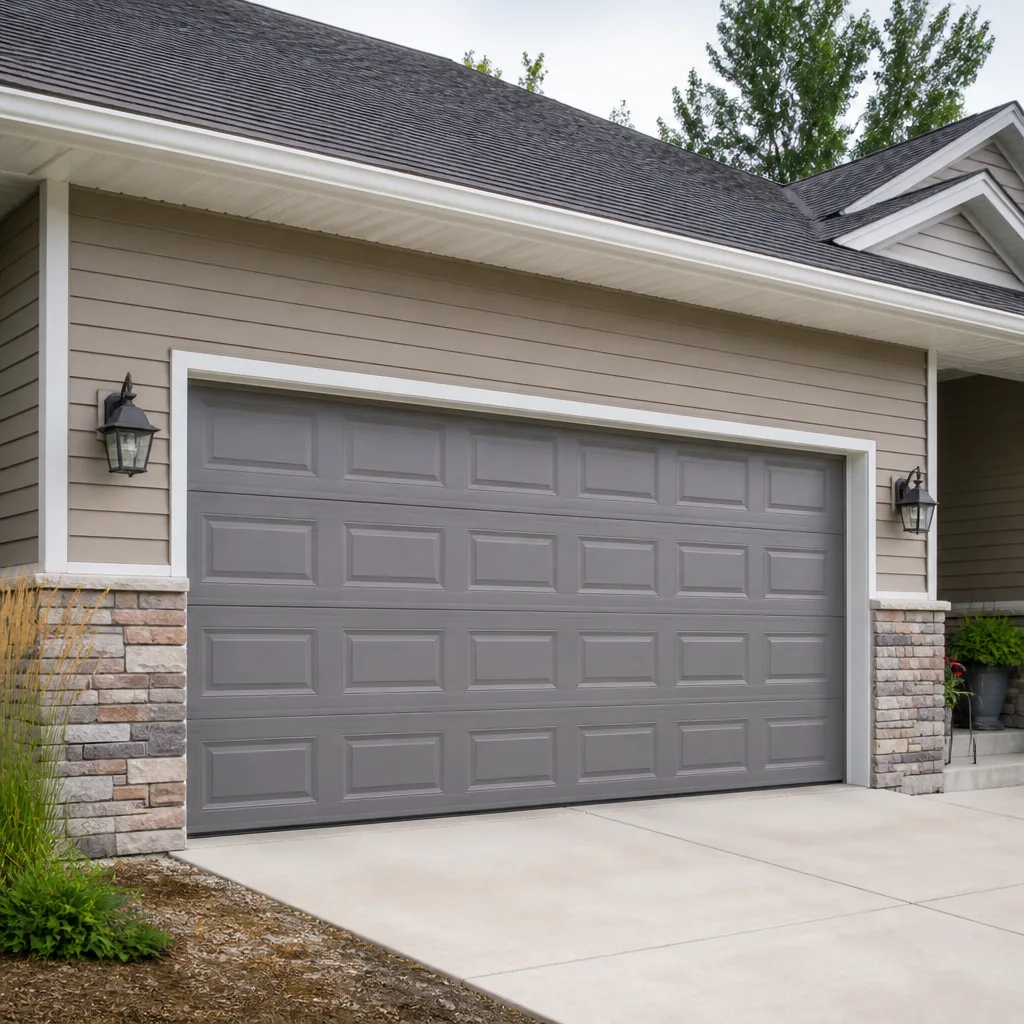 Raised-panel steel
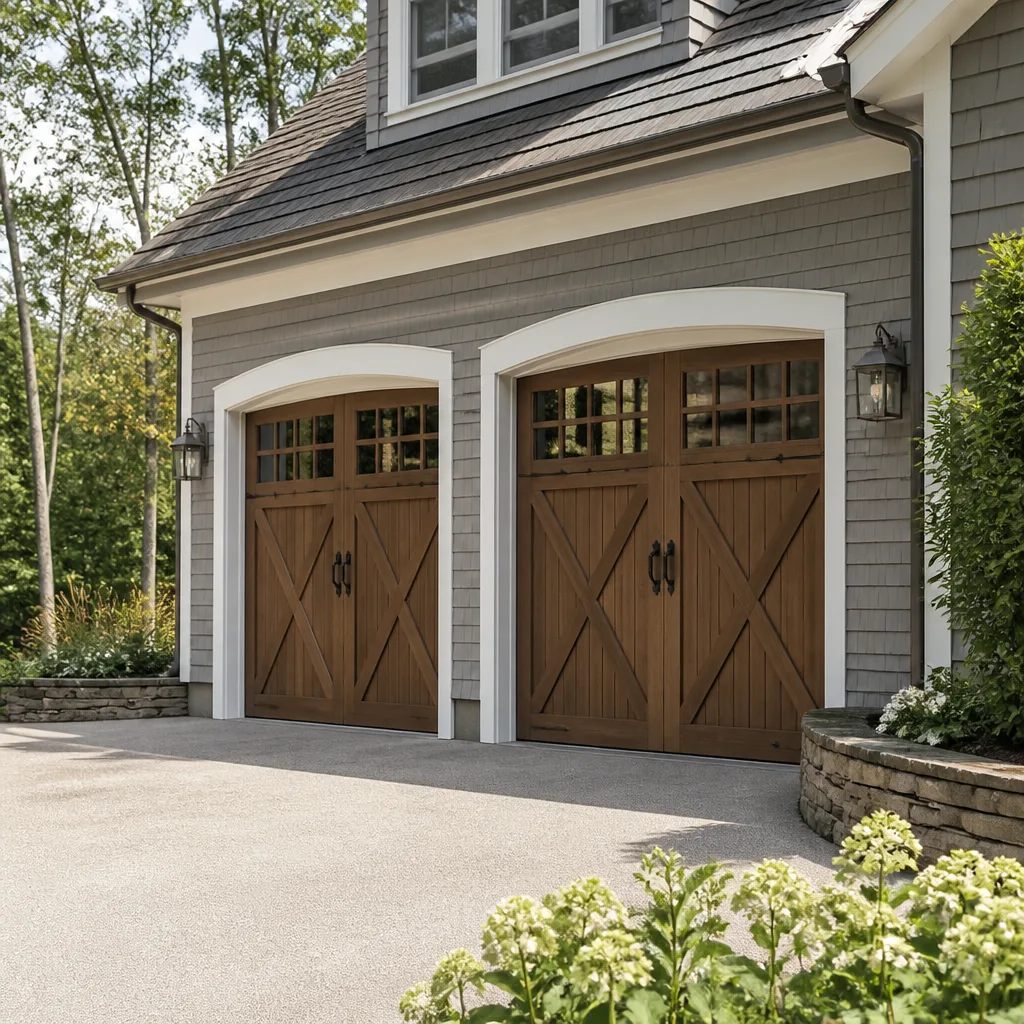 Carriage house
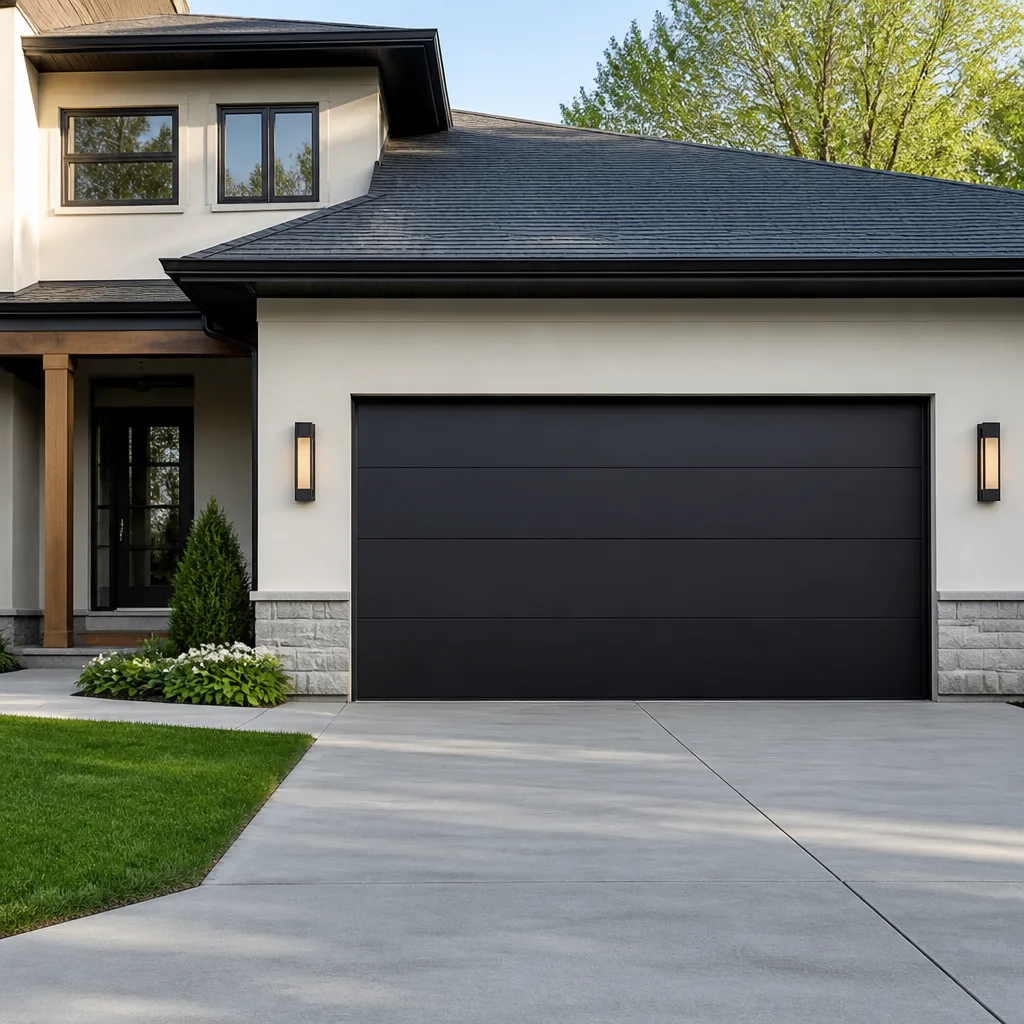 Modern flush
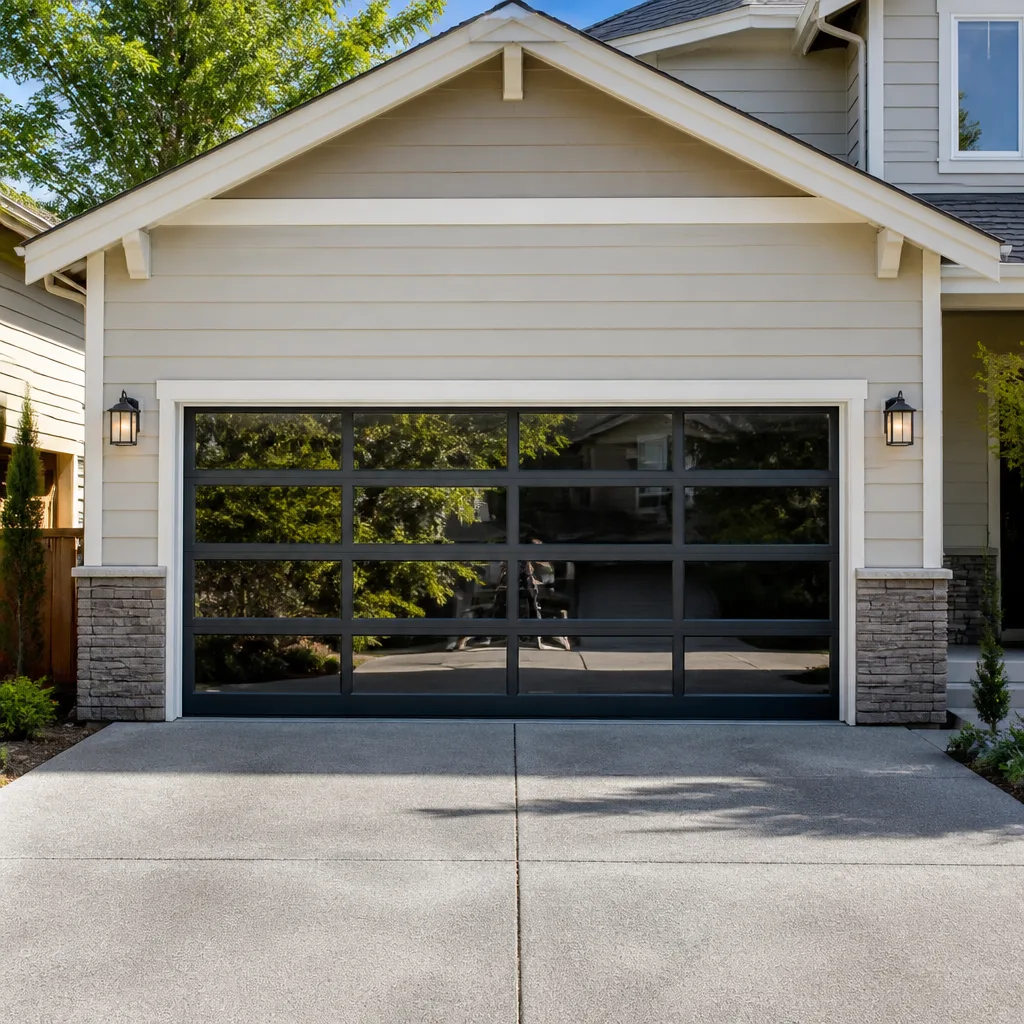 Full-view glass
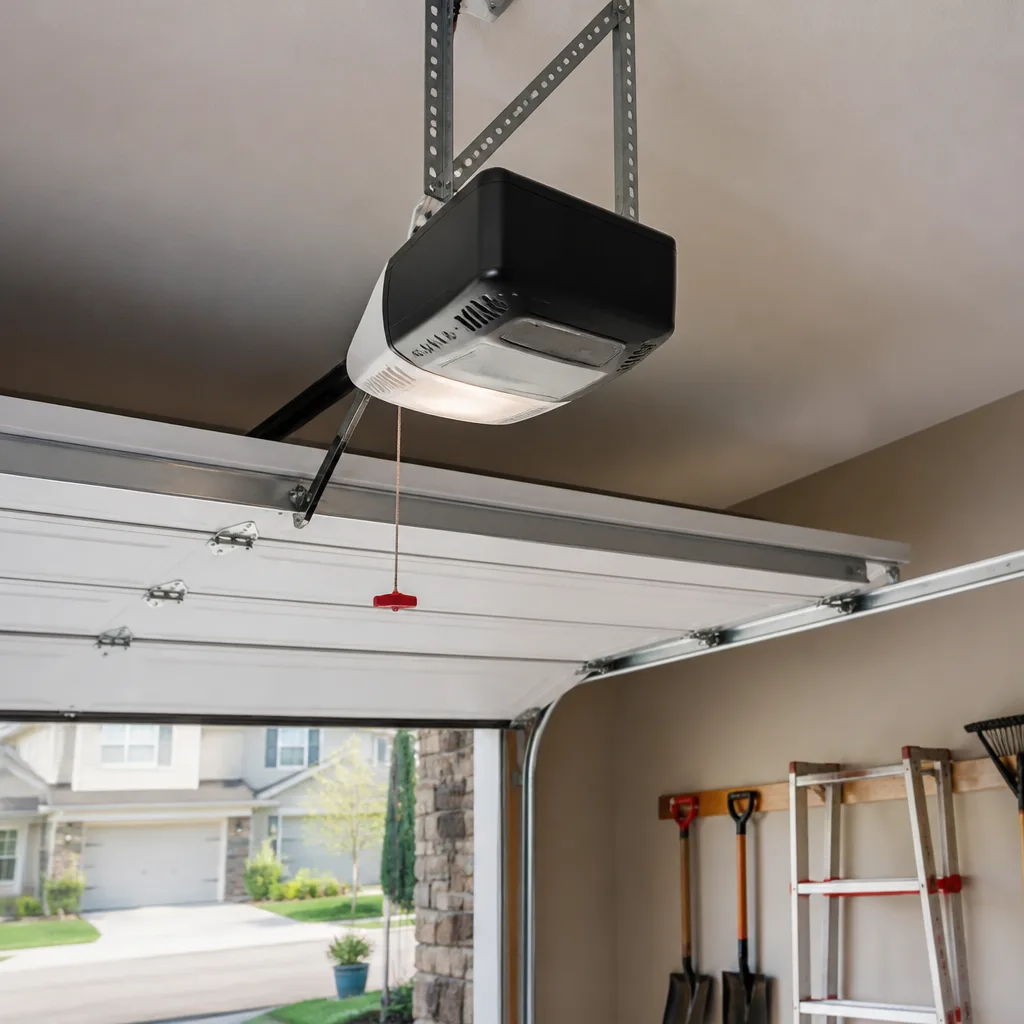 LiftMaster openers
 Chamberlain openers
Full 25-point door and opener safety check with every visit - springs, cables, rollers, tracks, and your LiftMaster or Chamberlain opener included
You get a price before we start. It does not change when the truck arrives.
Get your free estimateGarage Door Warning Signs: A Pasadena Homeowner’s Reference Guide
Most garage door failures in Pasadena don’t announce themselves with a bang. They whisper for months first. The door hesitates for half a second before lifting. A cable shows three broken strands instead of twenty. A roller chirps only on the final two feet of travel. Homeowners hear these signals, shrug, and tell themselves the door still works. Then one Tuesday morning the door won’t open at all, and a repair that would have cost $180 becomes a $900 track-and-cable replacement. This guide breaks down the earliest warning signs we’ve documented across Pasadena neighborhoods, what each one indicates, and the exact point where watching and waiting turns into paying more. For a broader overview, see The Complete Guide to Garage Door in Pasadena.
Styles & brands we work with
Quick Answer
The earliest garage door warning signs in Pasadena are subtle: a half-second hesitation before the door moves, a faint grinding or chirping at specific points in the travel cycle, frayed cable strands visible near the bottom roller, and a door that sits slightly uneven when open. Any of these signals warrants a professional inspection within weeks, not months, because each one points to a small component failing that will eventually damage the larger system. Our How to Hire a Garage Door Contractor in Pasadena: A Step-by-Step Guide explains what to look for in a qualified technician.
Table of Contents
- The Half-Second Hesitation: Reading Spring Tension Before It Fails
- Cable Fraying: What Every Stage Looks Like and When It Becomes Dangerous
- Track Alignment vs. Roller Wear: How to Tell Them Apart by Where the Noise Happens
- The Uneven Door: Why One Side Higher Means a Spring Problem, Even When Both Springs Look Fine
- Pasadena’s Climate and Bottom Seals: UV, Heat Cycling, and What You’re Not Seeing
- Step-by-Step: The 10-Minute Monthly Inspection Every Pasadena Homeowner Should Do
- Common Mistakes to Avoid
- When to Call a Professional
- Frequently Asked Questions
- The Bottom Line
The Half-Second Hesitation: Reading Spring Tension Before It Fails
A garage door that hesitates for half a second before moving is not “just a little slow.” That pause is physics telling you something specific: the torsion spring is no longer holding enough tension to lift the door’s full weight instantly. The opener motor is compensating for the deficit. And every time it compensates, it works harder than it was designed to. That half-second pause has a dollar amount attached to ignoring it.
Here’s the plain-language version. A typical steel double garage door weighs between 250 and 350 pounds. The torsion spring, that thick coiled spring mounted horizontally above the door opening, is wound tight enough to bear nearly all of that weight. The opener motor exists to guide the door along the track, not to muscle it up. When a spring loses tension through metal fatigue or heat cycling, the motor picks up the slack. Pasadena’s hot summers accelerate this fatigue. We’ve seen springs in Pasadena homes lose measurable tension within three years of installation, while identical springs in coastal climates last five or more. For a maintenance schedule tailored to local conditions, see our Seasonal Garage Door Care for Pasadena: Year-Round Homeowner’s Guide.
The warning sign shows up before the spring snaps. You’ll notice the door “pauses” or “settles” before lifting, or it seems heavier during manual operation. Some openers emit a brief grinding sound as the motor strains. If you catch it at this stage, the fix is usually a spring tension adjustment or replacement, typically $180 to $340 in Pasadena. If you wait until the spring snaps, the door can slam down if safety cables aren’t installed, bending tracks, cracking panels, and occasionally pulling the opener carriage off its rail. That repair climbs to $600 and up.
We’ve also seen hesitation signal a failing opener capacitor or worn drive gear, especially in Chamberlain and Genie units that have been in service for a decade or more. A technician can distinguish between spring tension loss and motor wear within minutes by disconnecting the opener and manually lifting the door. If the door feels heavy, it’s the spring. If it moves easily, the motor is the problem. That diagnosis is something we do on every garage door repair in Pasadena call before quoting a price.
Cable Fraying: What Every Stage Looks Like and When It Becomes Dangerous
Garage door cables don’t snap without warning. They telegraph the failure for weeks, sometimes months. The challenge is that the earliest stages of fraying are hard to see unless you know exactly where to look and what you’re looking at. A cable can be anywhere from 40 to 90 percent compromised while the door continues to operate normally, because the remaining strands hold the load, until they don’t.
Stage one: surface fuzzing. The cable, which is made of seven bundles of seven wires each, develops a fuzzy appearance where individual outer wires have broken but the seven-bundle structure remains mostly intact. This happens most often near the bottom roller bracket, where the cable bends around a tight radius thousands of times per year. At this stage the cable is still holding. Watch and wait is defensible for a few weeks, but you should photograph the cable and compare it on your next monthly check.
Stage two: visible strands. You can now count broken wire strands poking out from the cable body. Three to five broken strands on a 7×7 cable means it’s lost perhaps a third of its tensile strength. This is a safety risk, not a watch-and-wait. When we see this in Pasadena, we recommend same-week replacement. A typical cable replacement runs $150 to $275 depending on cable type and drum condition. The choice between a simple cable swap and a full cable-and-drum replacement is exactly the kind of judgment call the garage door cable repair process is built around.
Stage three: birdcaging. The cable has deformed into a spiral shape at the stress point, looking like a small birdcage. At this point the cable can fail at any moment, with zero additional warning. The door may be under partial load when it gives, causing the door to cock violently and bend the track. We’ve seen birdcaged cables hold for two weeks and we’ve seen them fail the same day a homeowner noticed them. This is a same-day service call situation.
One Pasadena-specific note: homes in Eaton Canyon and the San Rafael Hills sit closer to chaparral and dry brush. Ash from fire seasons is mildly alkaline and can accelerate surface corrosion on galvanized cables. We’ve seen stage-one fraying progress to stage-three faster in those neighborhoods than in central Pasadena. If you’re in a hillside zone, check your cables monthly during the dry months.
Track Alignment vs. Roller Wear: How to Tell Them Apart by Where the Noise Happens
Here’s a diagnostic method that costs nothing and saves hundreds: instead of noting that the door “squeaks,” note where in the travel cycle it squeaks. Track alignment problems and roller wear problems produce different noise signatures at different points in the door’s path. Knowing which one you’re hearing determines whether the fix is a $10 roller or a $200 track adjustment.
Roller wear sounds like chirping or chattering that happens through the entire travel cycle. Worn rollers, especially the nylon-on-steel type common in Clopay and Amarr doors, develop flat spots from years of rolling over the same track surfaces. A flat spot produces a rhythmic thump-thump-thump as the door moves. Nylon rollers that have lost their nylon coating grind metal-on-metal. If the noise is constant regardless of door position, it’s almost always rollers. Replacing a set of standard rollers runs $75 to $125. Heavy-duty sealed bearing rollers cost more but eliminate the problem for a decade.
Track misalignment sounds like a scraping or rubbing noise that appears only at one point in the travel cycle. As the door passes through a particular section of track, a roller binds against a misaligned joint or a bent section of rail. The noise peaks at that point and fades. This often develops after a track bolt works loose over months of vibration, or after a family member nicked the track with a car bumper. The track itself isn’t bent, it’s just sitting a quarter-inch out of position. A track alignment service call typically runs $125 to $200 in Pasadena, and a technician can see it immediately with a level.
The tell-tale sound of a failing opener gear is a rapid clack-clack-clack coming from the motor housing itself, not from the door or track. This is common on older Genie screw-drive and Chamberlain chain-drive models. The nylon worm gear strips over years of use, especially when the spring has been under-tensioned and the motor has been doing the heavy lifting. If you hear this, the garage door opener repair path starts with a diagnosis of the gear versus the logic board versus the capacitor.
Write down where the noise happens. “It’s loudest when the door is about two feet from the floor” is far more useful to a technician than “it squeaks.” That sentence shortcut cuts the diagnostic visit in half.
The Uneven Door: Why One Side Higher Means a Spring Problem, Even When Both Springs Look Fine
Most double-car garage doors in Pasadena use a two-spring system: two torsion springs mounted side by side above the opening, or two extension springs running along the horizontal tracks. When one of those springs fails, the door should pull unevenly. But here’s what catches homeowners off guard: the door can sit perfectly level at rest, then travel unevenly as it opens, with one side rising faster than the other. Mid-travel you’ll see a visible slant, the bottom edge cocked at an angle. By the time the door reaches full open, it may level out again. This uneven travel is a classic spring failure signature, and it happens even when both springs appear intact from the outside.
Here’s why. Torsion springs fail internally, with micro-fractures in the spring wire that don’t produce a visible break on the surface. One spring loses tension while retaining its physical shape. The other spring, still holding tension, lifts its side of the door normally. The dead spring’s side lags. As the opener continues pushing, the geometry of the track forces the door to level out near the top, masking the problem. The spring never has to look broken for this to be a broken spring.
We’ve seen this pattern consistently in Pasadena, including in homes at the base of the San Gabriels where garage temperatures swing 40 degrees between August afternoons and January nights. That thermal cycling fatigues spring steel, and the failure is often internal rather than catastrophic. If your door opens with a visible tilt and then straightens out, get a spring inspection immediately. The service call is inexpensive. A full two-spring replacement in Pasadena typically runs $280 to $420, including the springs and labor. Waiting until the second spring fails is what turns a $300 repair into a $900 one.
Pasadena’s Climate and Bottom Seals: UV, Heat Cycling, and What You’re Not Seeing
Bottom seals on garage doors in Pasadena fail faster than in most Southern California communities, and they fail silently. The problem is triple: sustained UV exposure from Pasadena’s 280-plus sunny days per year, repeated heat cycling from the sun-baked concrete slab under the door, and periodic ash fall from fires in the Angeles National Forest. Each of these attacks the rubber or vinyl seal in a different way, and the damage accumulates before you notice it.
UV radiation hardens the seal’s surface, causing hairline cracks that deepen over time. Heat cycling from the slab, which can reach 140 degrees on an August afternoon, expands and contracts the seal material every single day, accelerating fatigue cracking. Ash is abrasive and mildly corrosive; it settles into the seal grooves and grinds against the rubber each time the door closes. The result is a seal that looks intact from six feet away but leaks air, water, and most critically, rodents, at the corners.
Here’s what to look for. Run your hand along the inside bottom edge of the closed door on a sunny afternoon. Can you see daylight under any section of the seal? Does the seal look flattened, with no compressibility left? Have you found mouse droppings or paper shreddings near the water heater or storage shelves in the garage? Pasadena’s rat population, especially roof rats in neighborhoods with mature fruit trees like Bungalow Heaven and Madison Heights, treats a compromised bottom seal as an open invitation. Once they’re in, they chew wiring, nest in insulation, and leave a problem far more expensive than the $60 to $120 a seal replacement costs.
The seal replacement itself is a simple job: pull the old seal from the aluminum retainer, slide in the new one, trim to length. If done without dismounting the door, it’s under an hour. We recommend Pasadena homeowners replace their bottom seal every two to three years, or immediately upon noticing daylight, stiffness, or rodent signs.
Step-by-Step: The 10-Minute Monthly Inspection Every Pasadena Homeowner Should Do
Nothing here requires tools beyond your eyes, ears, and hands. This inspection catches every warning sign in this guide at the stage where it’s cheap to fix. Do it the first weekend of every month. Most Pasadena homeowners spend more time washing one car than this takes.
- Close the door and check the bottom seal. Crouch down at the center of the door and look under it. If you see daylight, the seal has failed. Then check the corners inside the garage, where failures start first. Run a hand along the seal to feel for hardness or cracking.
- Open the door and watch the first six inches of travel. Look for the half-second hesitation. Then watch the door through the full cycle. Does it travel evenly, or does one side lag mid-travel? Even a half-inch slant is significant.
- Listen during the full open and close cycle. Note where in the travel any noise occurs, not just that noise exists. Constant chirping means rollers. Point-specific scraping means track alignment. Clacking from the motor housing means opener gears.
- Inspect both cables visually. Look at the section of cable near the bottom roller bracket on each side. Look for fuzzing, visible broken strands, or birdcaging. Photograph anything you’re unsure about so you can compare next month.
- Disconnect the opener using the red emergency release handle. Manually open and close the door. It should move smoothly with steady resistance and stay open at about waist height without dropping. If it feels heavy, the springs are losing tension. If it drops, the springs are critically under-tensioned or broken. Do not attempt to rewind or remove a torsion spring yourself: these springs are under several hundred pounds of stored force and can cause severe injury. This is a trained-professional repair, every time.
- Check the rollers where they meet the track. Look for cracks in nylon rollers. Any roller with visible damage or that doesn’t spin when the door moves is done. Most roller replacements are $10 to $20 per roller plus a service visit.
- Tighten anything that rattles. Track bolts, hinge bolts, and opener rail fasteners work loose over time. Use a socket wrench to snug any loose hardware you can reach from the floor. Don’t mess with anything connected to the springs.
If the inspection turns up anything in stages two or three from the cable section, an uneven travel pattern, or a heavy-feeling door, that’s the moment to make a call. These are conditions that get more expensive the longer they wait.
Common Mistakes to Avoid
- Lubricating a failing spring to try to squeeze more life out of it. Lubricant doesn’t restore lost tension. A spring that’s lost its temper is done, and while lubrication may quiet a noise temporarily, it masks the problem and lets the underlying metal fatigue progress. Spring replacement is the only fix.
- Ignoring a broken spring because the opener still lifts the door. A motor strong enough to dead-lift 300 pounds doesn’t mean the system is safe. Every cycle the opener performs on a broken spring is wearing out the motor, the gear, and the carriage, all of which cost more than the spring itself.
- Replacing one spring when the system was built for two. Both springs were installed at the same time and have cycled the same number of times. If one has failed, the other is near the end of its life. Replacing one means paying for two service calls instead of one. We always recommend both on a two-spring system.
- Using the wrong lubricant. WD-40 is a solvent, not a garage door lubricant. It strips existing grease and accelerates wear. Use a lithium-based grease on metal parts and a silicone spray on nylon rollers. Never lubricate the torsion spring itself.
- Powering through a door that starts and stops. If the door opens partway, stops, and reopens after you press the button again, something is binding or the opener is overheating. Repeatedly forcing it compounds the damage. The safety reversal system is your early warning; it’s not there to be overridden.
- Assuming a noisy door is just “old.” Age doesn’t make garage doors noisy. Worn parts make garage doors noisy. A 20-year-old door with good rollers and proper lubrication operates quietly. Noise is always a signal, never a personality trait of the door.
When to Call a Professional
Any stage-two or stage-three cable damage is a same-week service call. Any door that travels unevenly, any spring that’s visibly broken, any door that’s heavy under manual operation, these are not watch-and-wait conditions. If your door has come off its track, if a cable has already snapped, or if the door won’t open and your car is trapped inside, that’s a today problem. Torsion springs are under several hundred pounds of stored force; the garage door is the largest moving object in your home. Neither rewards experimentation. Brock Garage Doors Pasadena offers free estimates in Pasadena, and every job comes with a written price before any work begins. Call (626) 788-0967 and a live person answers, day or night. Our technicians arrive in uniform, have passed background checks, and work on eight major brands including Chamberlain, Genie, Clopay, and Amarr.
Frequently Asked Questions
Most early-warning repairs in Pasadena cost between $75 and $420, depending on what the warning sign turns out to be. Roller replacement starts around $75, track alignment around $125, cable replacement between $150 and $275, and a full two-spring replacement between $280 and $420. The written price is given before any work starts, and the bill matches it exactly. Call (626) 788-0967 for a free estimate on your specific door.
With stage-one fraying, you have days to a few weeks of normal use before the risk becomes serious. With stage-two or stage-three damage, continued use is rolling dice. Each cycle risks a sudden cable failure that can cock the door violently, bend the track, and damage panels. If you can see broken strands or birdcaging, park in the driveway until a technician has replaced the cable.
A half-second or longer hesitation before the door moves almost always indicates the torsion spring has lost tension and the opener motor is dead-lifting the door. Left unchecked, the motor burns out in months. The fix is a spring tension adjustment or replacement, not an opener replacement, and catching it at the hesitation stage costs a fraction of the eventual bill.
Every two to three years in Pasadena, or sooner if you can see daylight under the closed door, the seal feels stiff or cracked, or you’ve found rodent signs in the garage. Pasadena’s UV intensity, hot slab heat cycling, and seasonal ash fall all shorten seal life compared to coastal areas.
It means one of your two springs has failed, even if both springs look intact from the outside. Internal metal fatigue can kill a spring without producing a visible break. The working spring lifts its side normally while the dead spring’s side lags, and the track geometry masks the problem by the time the door is fully open. Both springs should be replaced together.
Yes. A live person answers the phone at (626) 788-0967 around the clock, including nights and weekends, and emergency calls are scheduled the same day when a door is stuck open, stuck closed, or a cable has snapped. The technician arrives in uniform and gives you a written price before any work begins. For seasonal maintenance or general tune-ups, appointments are typically available within a few days.
The Bottom Line
A garage door in Pasadena is the largest moving object attached to your home, and it operates under tension. Every component in the system is connected, and the failure of any one part accelerates the failure of the others. The half-second hesitation becomes a dead opener motor. Three broken cable strands become a bent track. A stiff bottom seal becomes a rodent infestation. The fix on the early side of each of those equations is a fraction of the cost on the late side. Check your door once a month with the inspection steps above. When something looks wrong, call a professional who puts the price in writing before turning a single bolt. And when the repair is done, your Brock Garage Doors Pasadena home should have a written guarantee covering the work for a full year. If it fails inside that window, it gets fixed at no charge. That’s the standard. That’s the whole point.
Written by Wade Mercer, Owner at Brock Garage Doors Pasadena, serving Pasadena since 2001.
See the difference
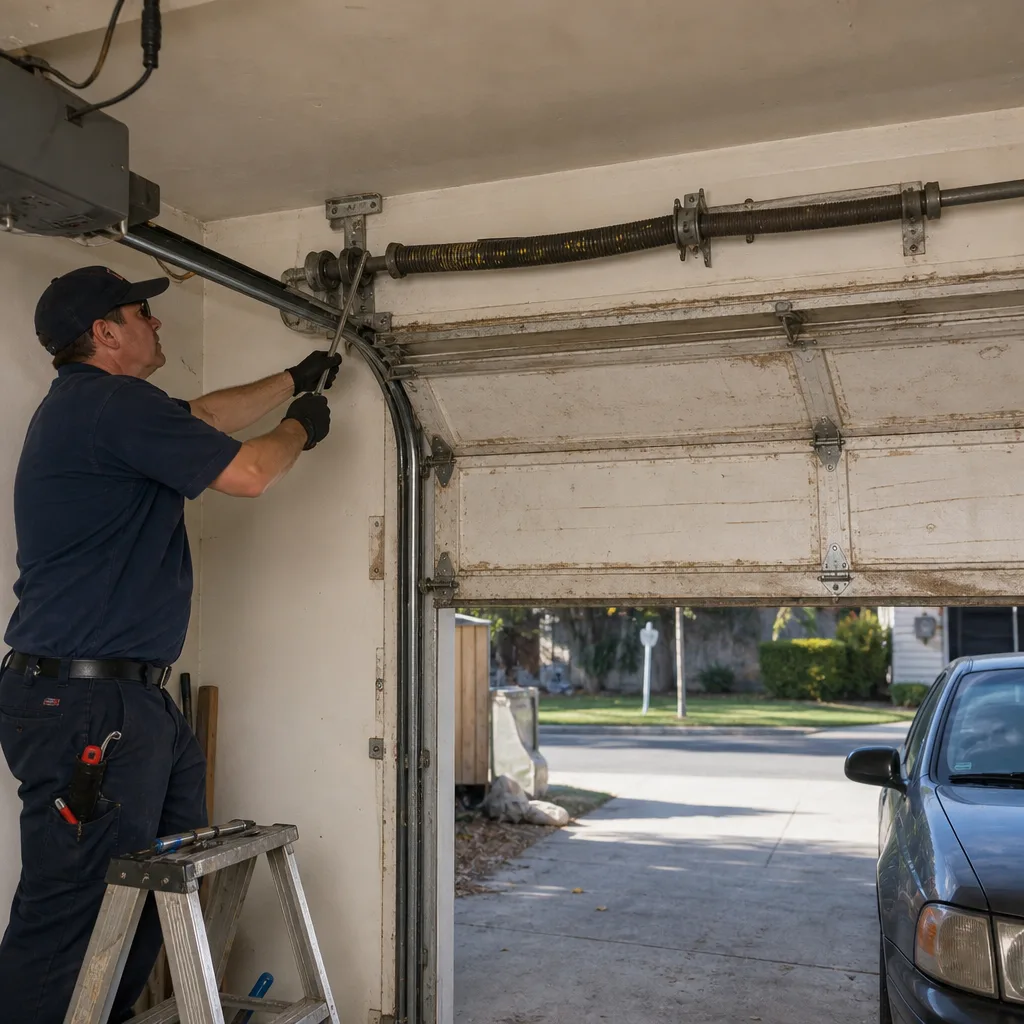 Before
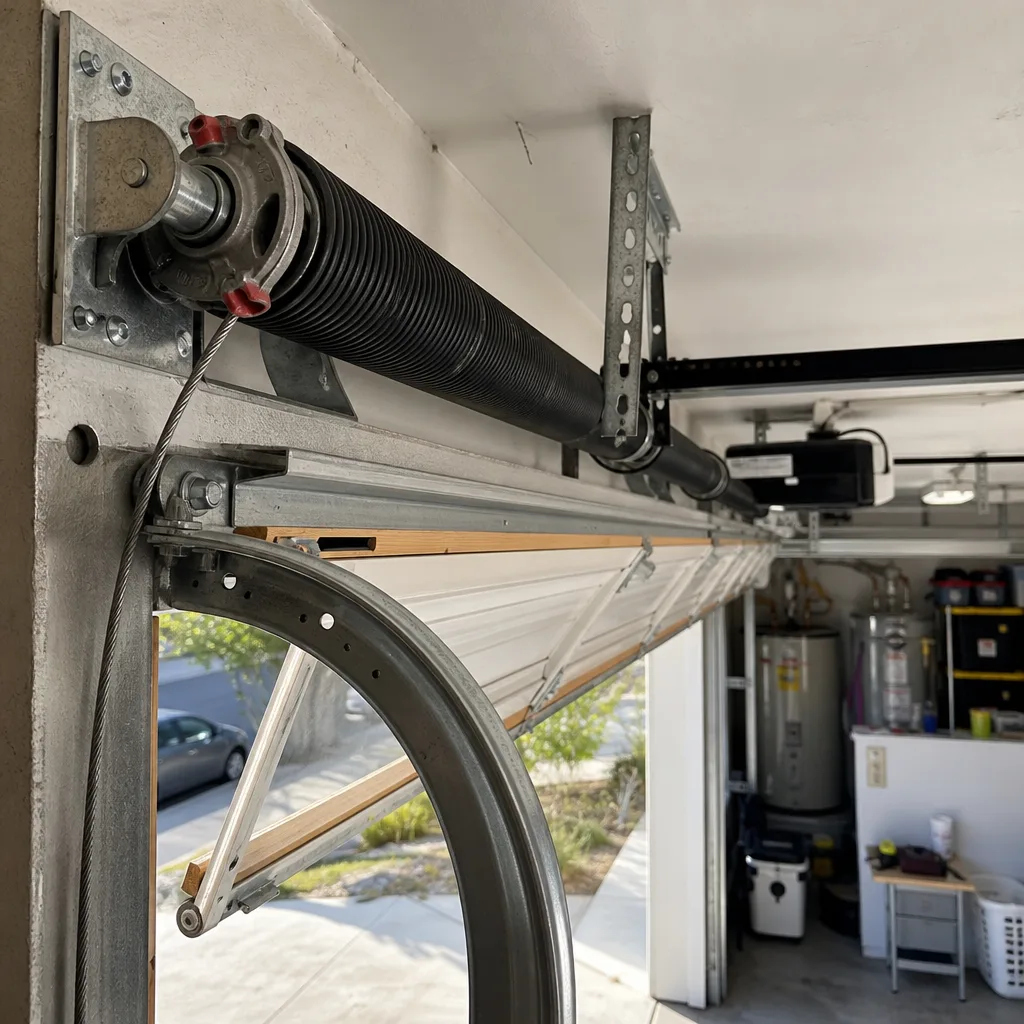 After
After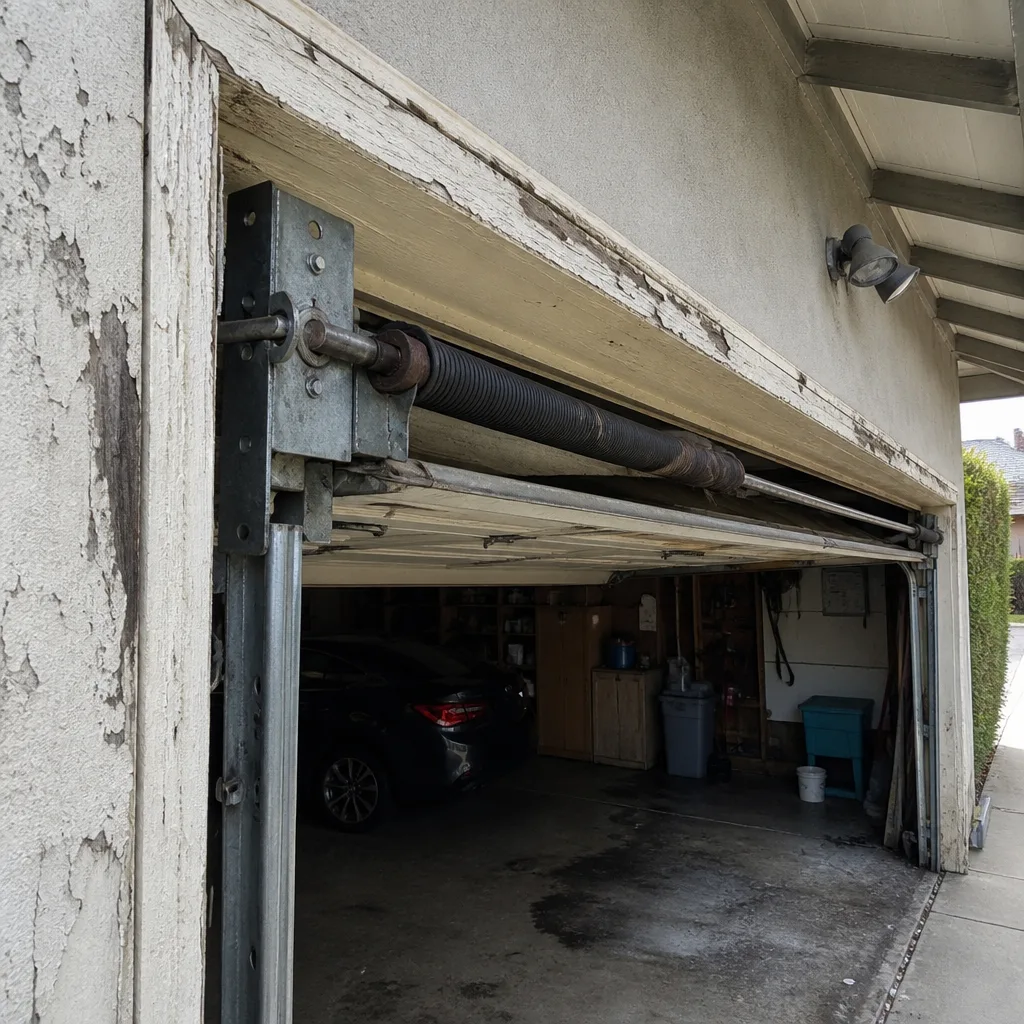 Before
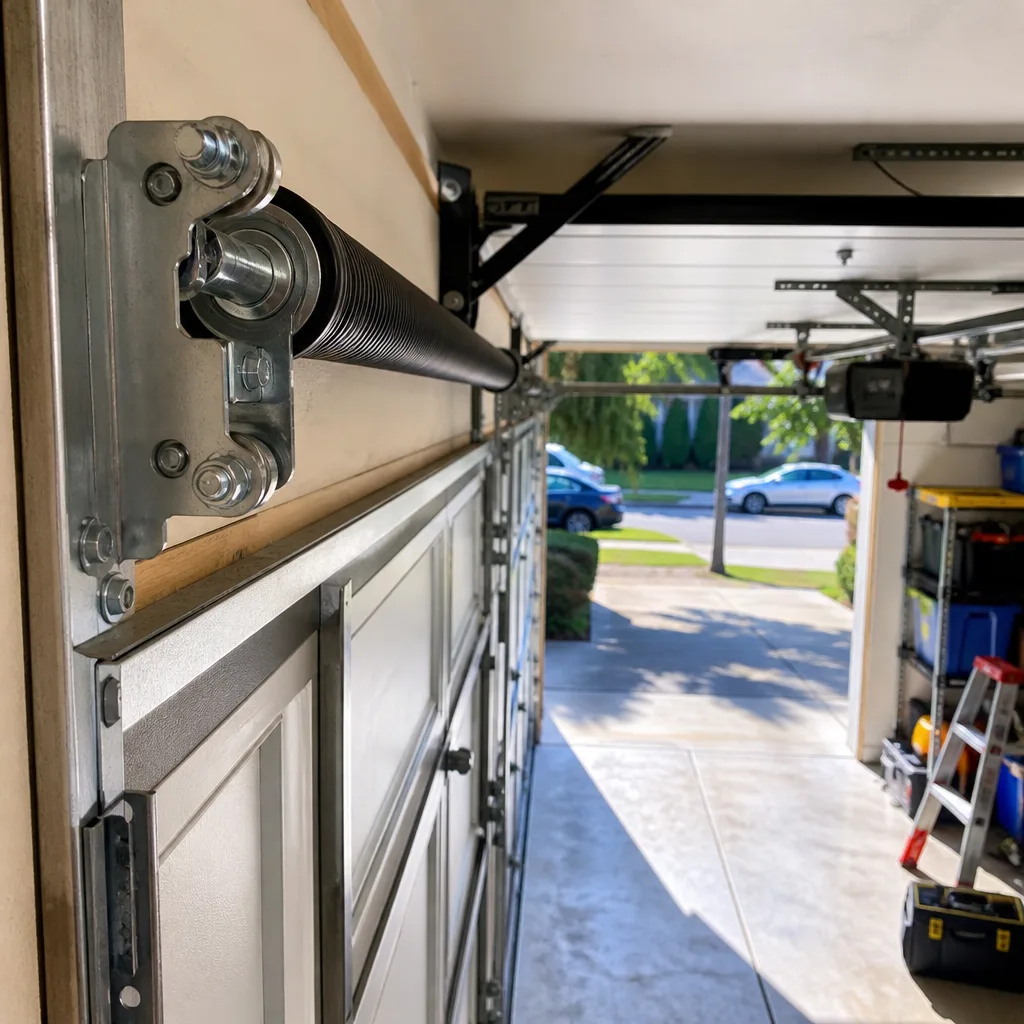 After
After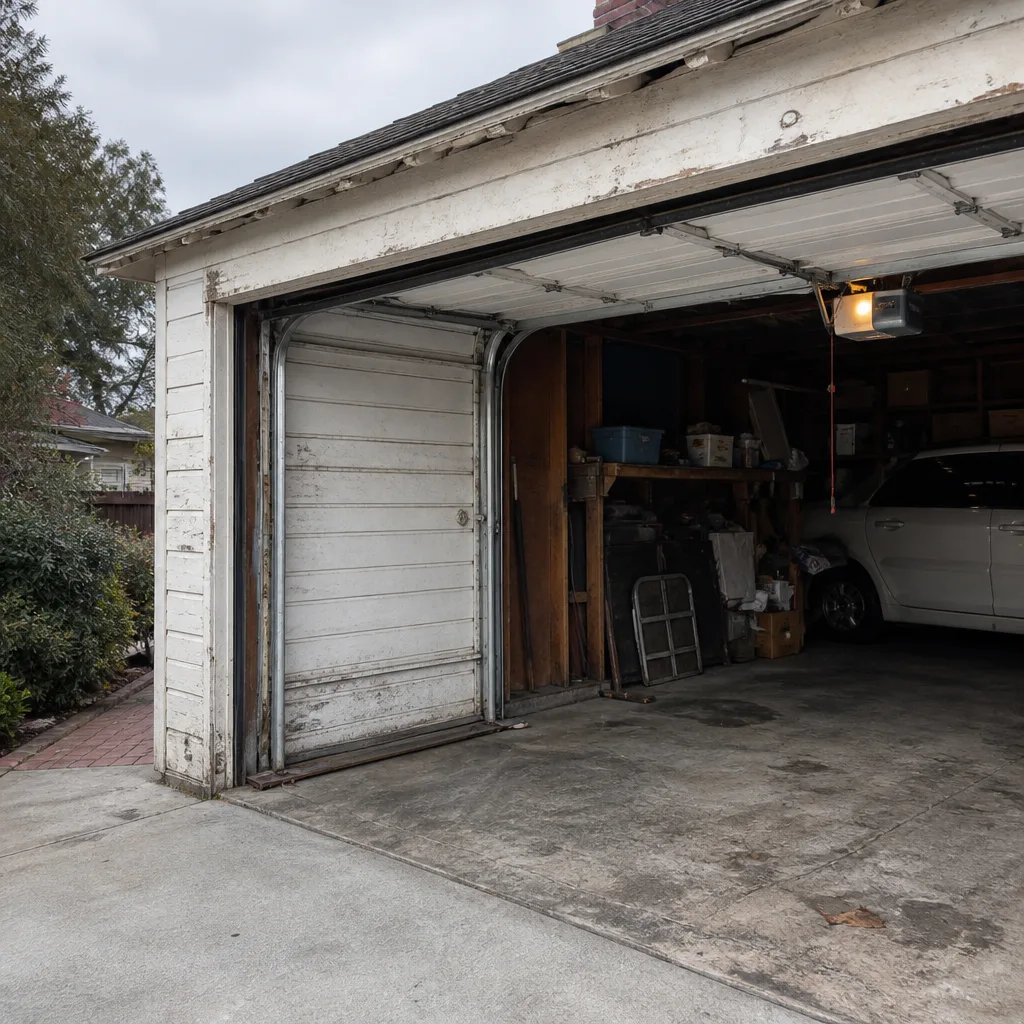 Before
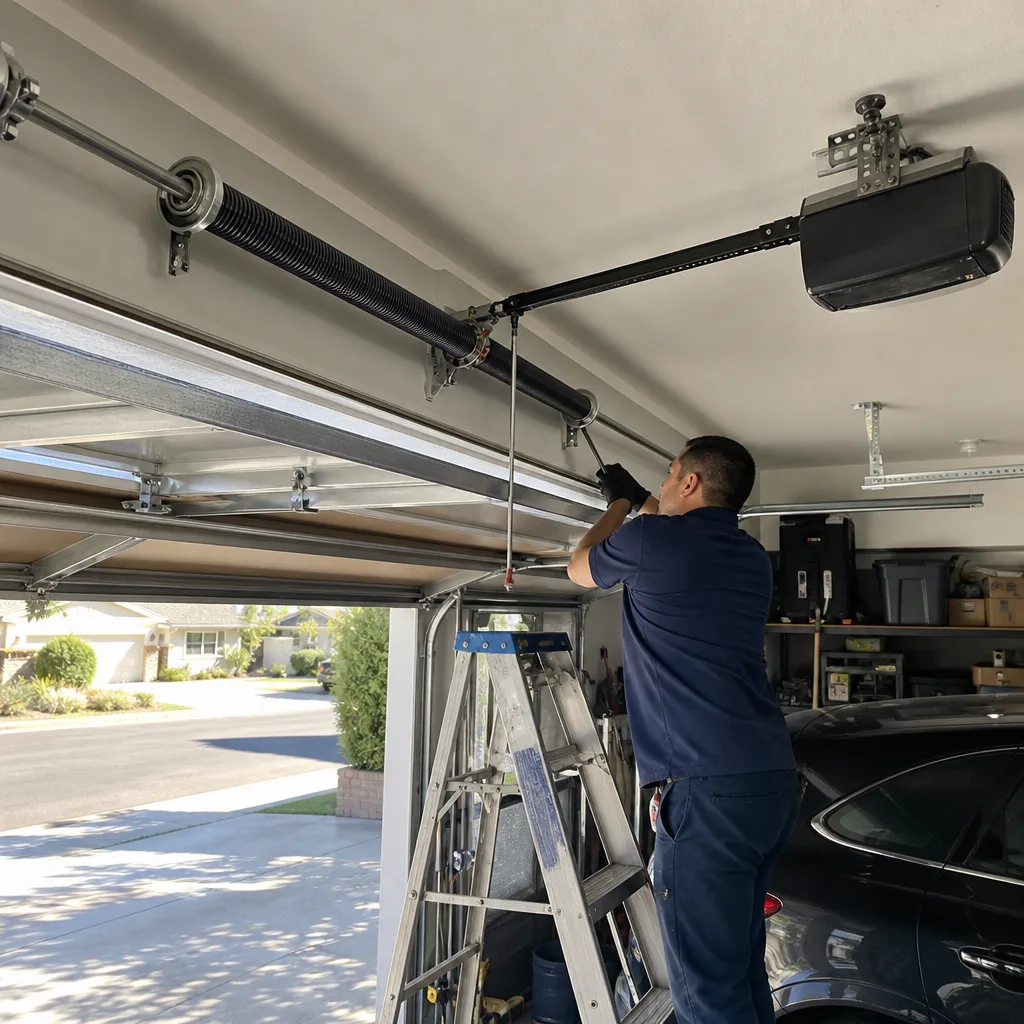 After
After